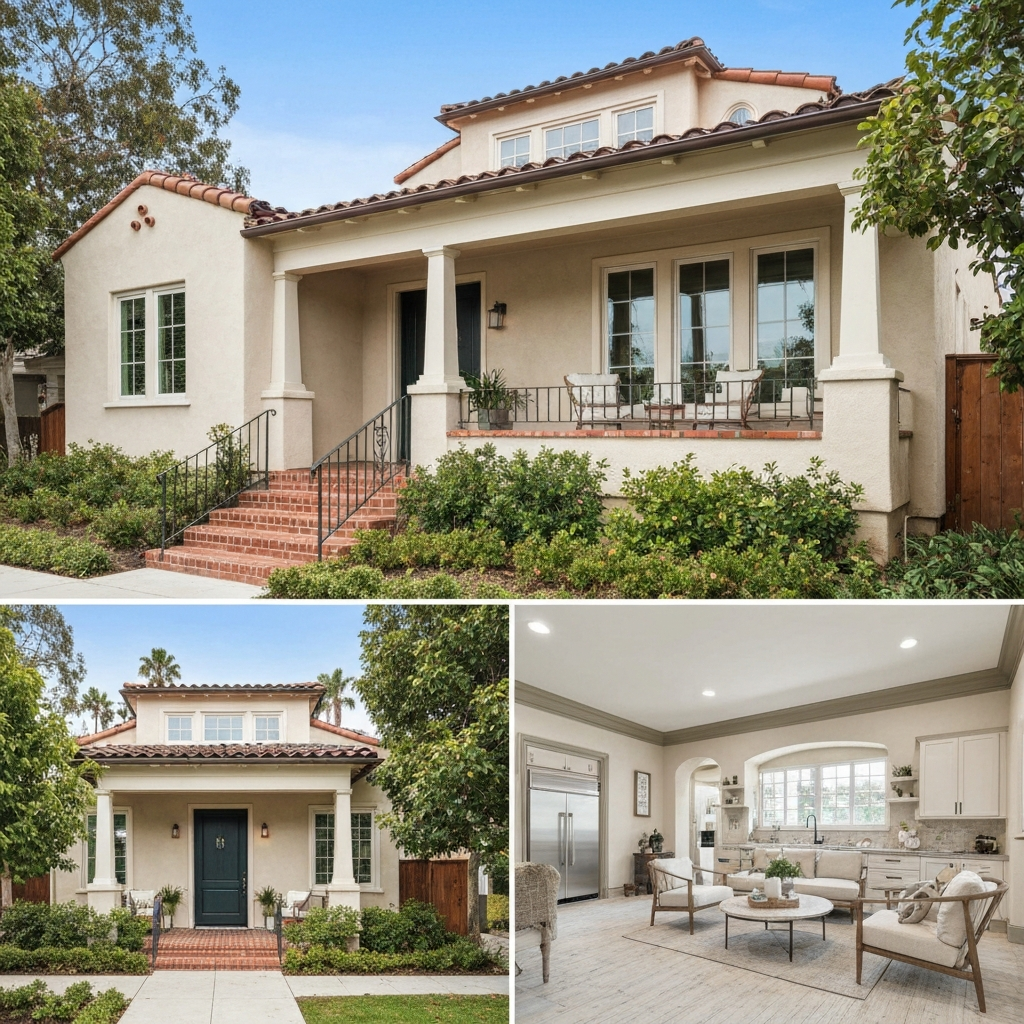
House Hacking in Southern California: How to Let Your Tenants Pay Your Mortgage
For many young professionals and first-time buyers in Southern California, the traditional path to homeownership seems increasingly steep. With median home prices in coastal counties pushing $1 million and Inland Empire prices steadily rising, saving a 20% down payment while simultaneously paying high rent can feel like running on a treadmill that's constantly speeding up. However, there is a powerful, proven strategy that can dramatically accelerate your path to homeownership and financial independence: House Hacking. This strategy involves purchasing a multi-unit property, living in one unit, and renting out the others to offset, or completely cover, your mortgage payment. In this comprehensive guide, we will explore the mechanics of house hacking, the financing programs that make it possible, and how you can implement this strategy in the competitive California market.
Section 1: What is House Hacking?
At its core, house hacking is a real estate investment strategy disguised as a primary residence purchase. The most traditional form of house hacking involves buying a multi-family property—specifically, a duplex (2 units), triplex (3 units), or fourplex (4 units). You live in one of the units and rent out the remaining units to long-term or short-term tenants.
The beauty of this strategy lies in the math. The rental income generated by your tenants is used to pay down your mortgage, cover property taxes, and handle maintenance expenses. In a highly successful house hack, the rental income covers your entire housing expense, allowing you to live "for free." Even if the rent only covers 70% or 80% of your mortgage, you are still dramatically reducing your living expenses compared to renting an apartment or paying a full mortgage on a single-family home.
While multi-family properties are the classic house hack, the strategy has evolved. In California, the recent relaxation of Accessory Dwelling Unit (ADU) laws has created a massive new opportunity. You can now purchase a single-family home with an existing ADU (or "granny flat"), live in the main house, and rent the ADU, or vice versa. You can also house hack by renting out individual bedrooms in a single-family home to roommates.
Section 2: The Financing Advantage: Why Multi-Family is the Ultimate Hack
You might be wondering: "If multi-family properties are such great investments, why doesn't everyone buy them?" The barrier to entry for pure investment properties is high. If you buy a duplex strictly as an investment (meaning you don't intend to live there), conventional lenders typically require a minimum down payment of 20% to 25%. On a $800,000 duplex, that's $160,000 to $200,000 in cash.
This is where house hacking unlocks a massive financial loophole. Because you intend to live in one of the units, the property is classified as your primary residence, not an investment property. This classification gives you access to the most favorable, low-down-payment owner-occupant financing programs available.
1. The FHA Loan (3.5% Down): This is the holy grail of house hacking. The Federal Housing Administration allows you to purchase a 1-to-4 unit property with a down payment of just 3.5%, provided you live in one of the units for at least one year. Using the same $800,000 example, your down payment drops from $160,000 to just $28,000. Furthermore, the FHA allows you to use 75% of the projected rental income from the *other* units to help you qualify for the loan. This means you can qualify for a much larger loan amount than your personal W-2 income alone would support.
2. The VA Loan (0% Down): For eligible veterans and active-duty military, the VA loan is the ultimate house hacking tool. You can purchase a multi-family property (up to 4 units) with absolutely zero down payment and no private mortgage insurance (PMI). Like the FHA loan, you can use the projected rental income from the vacant units to help you qualify. This allows military personnel stationed in San Diego or Riverside to build a rental portfolio with zero out-of-pocket down payment costs.
3. Conventional 5% Down: In recent years, Fannie Mae and Freddie Mac updated their guidelines to allow buyers to purchase 2-to-4 unit primary residences with just 5% down (previously, it required 15% to 25% down). This is a fantastic option for buyers with strong credit (680+) who want to avoid the permanent mortgage insurance associated with FHA loans.
Section 3: The Financial Mechanics of a House Hack
Let's look at a hypothetical (but realistic) example of a duplex house hack in the Inland Empire to illustrate the power of this strategy.
- Purchase Price: $750,000 (Duplex)
- Loan Program: FHA (3.5% down)
- Down Payment: $26,250
- Estimated Monthly Payment (PITIA + MIP): ~$5,500 (Assuming a 6.5% rate)
Now, let's look at the income side:
- You live in Unit A.
- You rent out Unit B for $2,600 per month.
The Result: Your tenants in Unit B are paying $2,600 toward your $5,500 mortgage. Your actual out-of-pocket housing expense drops to $2,900 per month. You are now living in a home you own, building equity, and enjoying the tax benefits of homeownership for roughly the same price (or less) than renting a nice apartment in Southern California.
But it gets better. Over time, rents will naturally increase with inflation. In five years, Unit B might rent for $3,000 or $3,200. Meanwhile, your 30-year fixed mortgage payment (principal and interest) remains exactly the same. Eventually, the rental income may cover your entire mortgage payment.
Section 4: The Strategy: From House Hacker to Portfolio Owner
House hacking is rarely a permanent living situation; it is a stepping stone. The typical strategy looks like this:
Year 1: You buy the duplex using an FHA loan (3.5% down) and move into Unit A. You rent out Unit B. You fulfill the FHA requirement to live in the property as your primary residence for one year.
Year 2 or 3: You have saved money because your living expenses were so low. You now want to buy a single-family home for yourself. You move out of Unit A and rent it out to a new tenant for market rate (let's say $2,600).
The New Math: The duplex now generates $5,200 in total rental income ($2,600 from Unit A + $2,600 from Unit B). Your mortgage is $5,500. The property is nearly breaking even or slightly cash-flowing, and your tenants are paying down the principal balance every month. You now own an investment property that you acquired for just 3.5% down.
You can then use a conventional loan (typically 5% down for a primary residence) to purchase your new single-family home. You have successfully transitioned from a renter to an owner of two properties (three units total) in a matter of years, using very little of your own capital.
Section 5: Challenges and Considerations
House hacking is a powerful financial tool, but it is not a passive investment. It requires work and tolerance for inconvenience.
1. Being a Landlord: When you house hack, you are a landlord living next door (or downstairs) from your tenants. You are responsible for maintenance, repairs, and collecting rent. If the toilet backs up at 2 AM, it's your problem. You must be prepared to screen tenants rigorously and manage the property professionally.
2. Loss of Privacy: You are sharing a wall, a driveway, or a yard with your tenants. You will hear their footsteps, their music, and their guests. You must be comfortable with a reduced level of privacy compared to living in a detached single-family home.
3. Finding the Right Property: In California, multi-family properties are highly sought after by seasoned investors. Finding a duplex or triplex that is in decent condition and priced reasonably requires patience and a skilled real estate agent who understands how to analyze rental markets and run cash flow projections.
Section 6: The ADU House Hack: The California Alternative
If sharing a wall with a tenant sounds unappealing, California's relaxed ADU laws offer a fantastic alternative. You can purchase a standard single-family home that already has a permitted ADU on the property. You live in the main house and rent out the ADU.
This provides significantly more privacy while still generating substantial rental income to offset your mortgage. Furthermore, properties with ADUs are generally easier to find and finance in suburban markets like Temecula, Murrieta, and Poway than traditional duplexes.
Conclusion: Accelerating Your Wealth
House hacking is one of the few legal, accessible "cheat codes" in real estate investing. By leveraging owner-occupant financing to acquire multi-unit properties, you can drastically reduce your living expenses, build equity at an accelerated rate, and lay the foundation for a lucrative real estate portfolio.
At FIG Homes & Loans, we specialize in helping buyers execute this exact strategy. Our dual-licensed team understands the nuances of FHA and VA multi-family guidelines. We can help you identify properties with strong rental potential, run the cash flow numbers, and secure the financing you need to start your house hacking journey.
About Us at FIG Homes & Loans
We at FIG Homes & Loans (formerly FIG Mortgages) are a premier, veteran owned real estate brokerage and mortgage lender operating across all 50 states. We specialize in unifying the home buying, selling, and financing journey under one roof. Whether you are navigating the luxury market, seeking commercial real estate, or require tailored lending solutions like VA, FHA, Jumbo, Non-QM, and Bank Statement loans, our team delivers unbeatable wholesale rates and exclusive access to top tier properties. Experience the seamless advantage of having your real estate agent and mortgage broker working in perfect harmony.
Ready to Start House Hacking?
Contact FIG Homes & Loans to discuss your strategy and see how much multi-family purchasing power you qualify for.
Helpful Resources & Next Steps

Frequently Asked Questions
Related Articles

The Art of the Contingent Offer: Buying a Home Before Selling Yours
Need the equity from your current home to buy your next one? Learn how to structure a winning contingent offer, explore bridge loans, and master the concurrent close.

The Pros and Cons of Buying New Construction in Riverside County
Thinking of buying a brand-new home in Menifee or Winchester? We break down the benefits of modern design against the hidden costs of landscaping, builder contracts, and Mello-Roos taxes.

The Ultimate Guide to Renovation Loans: Turning Fixer-Uppers into Dream Homes
Learn how to finance both the purchase and the renovation of a distressed property with a single mortgage. We break down the differences between FHA 203(k) and Fannie Mae HomeStyle loans.
Ready to Buy, Sell,
or Refinance?
From home search to closing — one team, one mission, all of California.
Direct Contact
Phone
(760) 576-2853Address
41593 Winchester Rd Ste 200
Temecula, CA 92590
Business Hours
Monday - Friday: 9:00 AM - 6:00 PM PT
Saturday by appointment | Sunday closed